


🔒 Annual Member Exclusive
🍁 State Ag Profiles: Northern Corridor
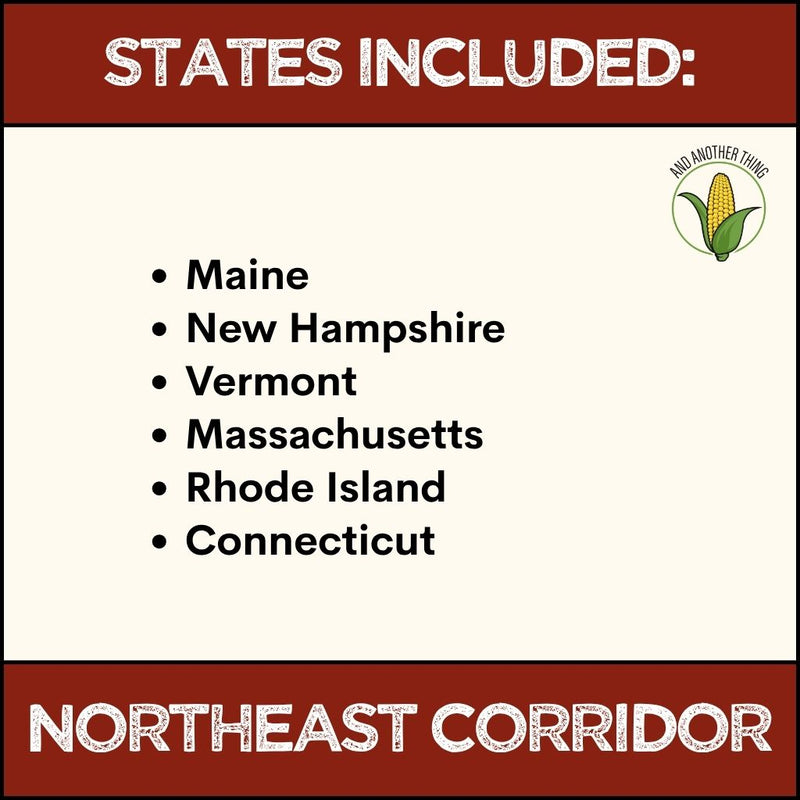
The Northern Corridor stretches across six New England states that share cold winters, rocky soil, and a deep reliance on both forest and sea, from lobster boats and cranberry bogs to maple sugarhouses and dairy pastures. Each profile in the set follows the same format, so students build consistent vocabulary and comprehension skills while comparing how geography and history have shaped agriculture differently in each state.
Explore the region through:
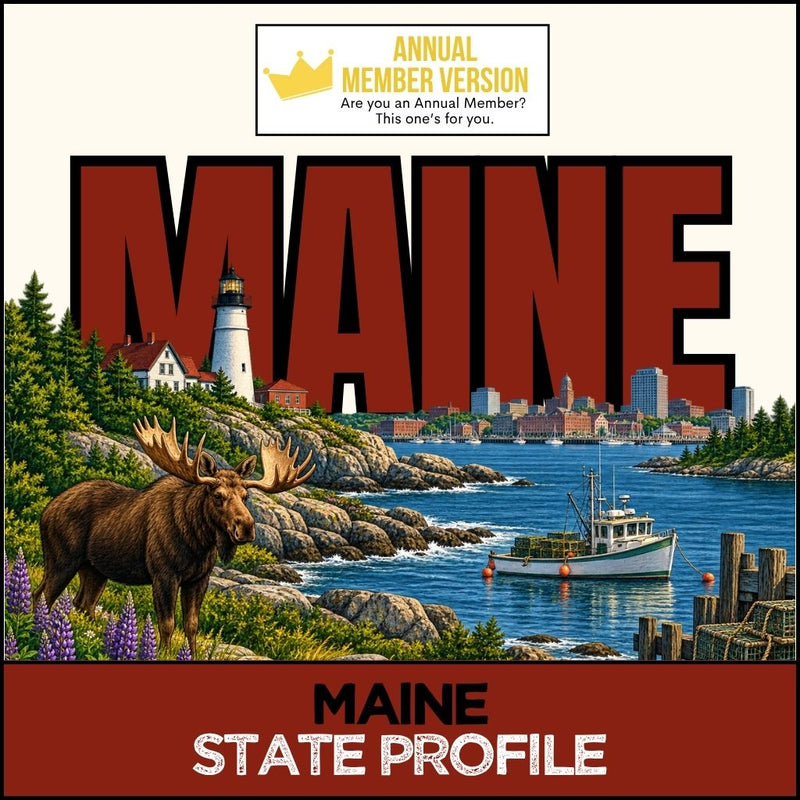
- Maine, which grows nearly all of the nation's wild blueberry harvest and is home to the country's most valuable single fishery, American lobster
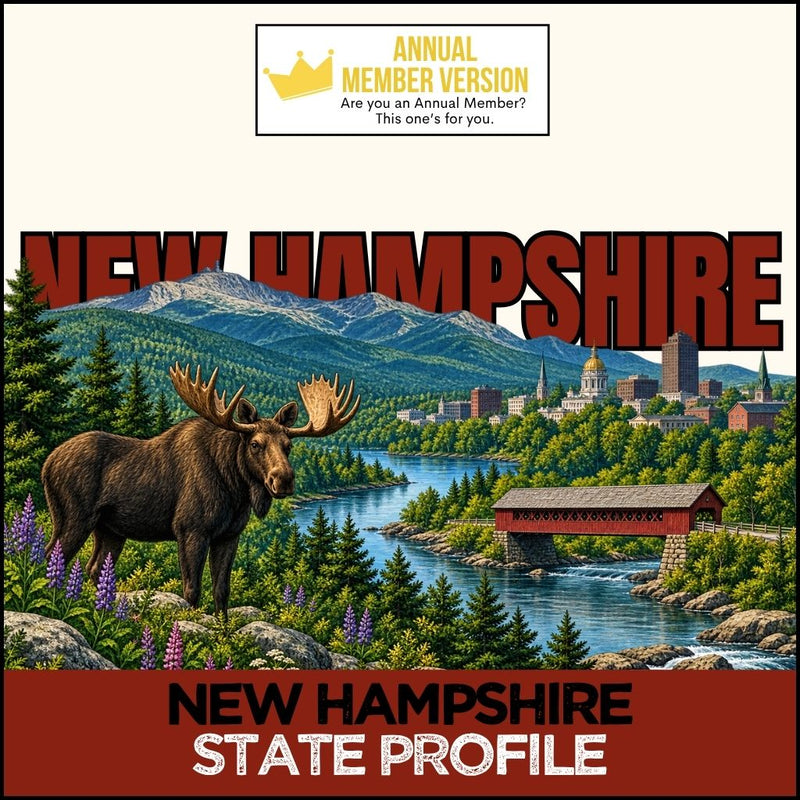
- New Hampshire, where Scots-Irish settlers planted North America's first potato crop in 1719, and where nearly one in three farms now sells directly to consumers, the highest rate in the country
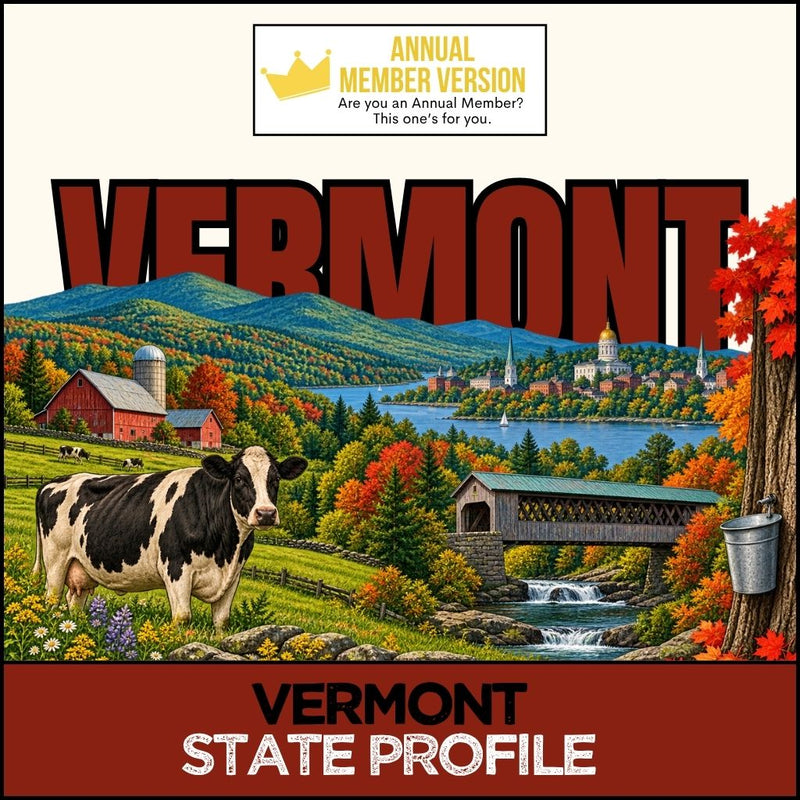
- Vermont, where producers tap more than 8 million maple trees to supply over half of the nation's maple syrup
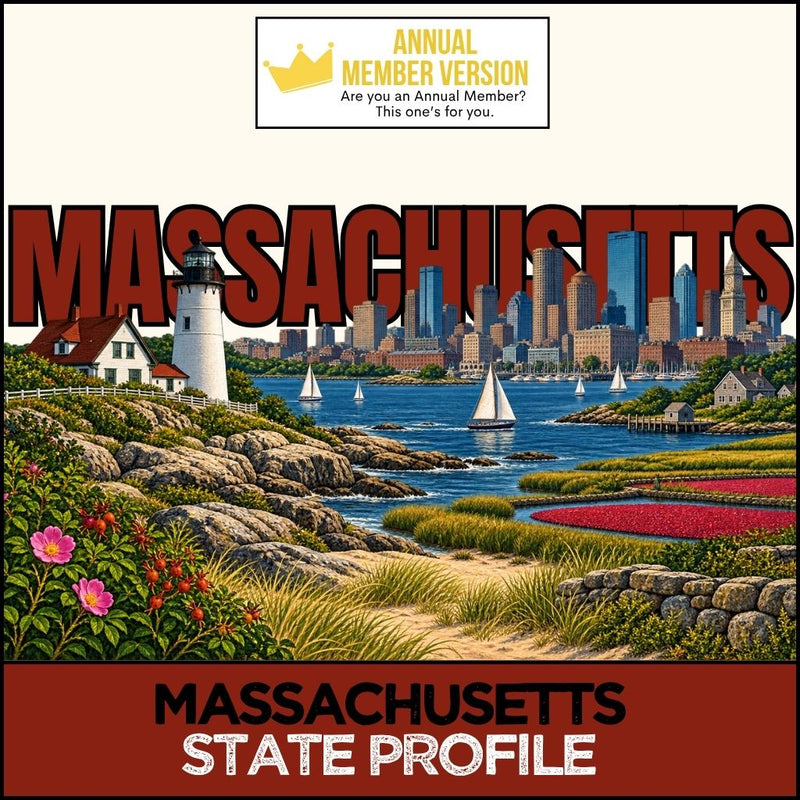
- Massachusetts, home to New Bedford, the nation's top value seafood port for more than two decades, and the country's second largest cranberry producer
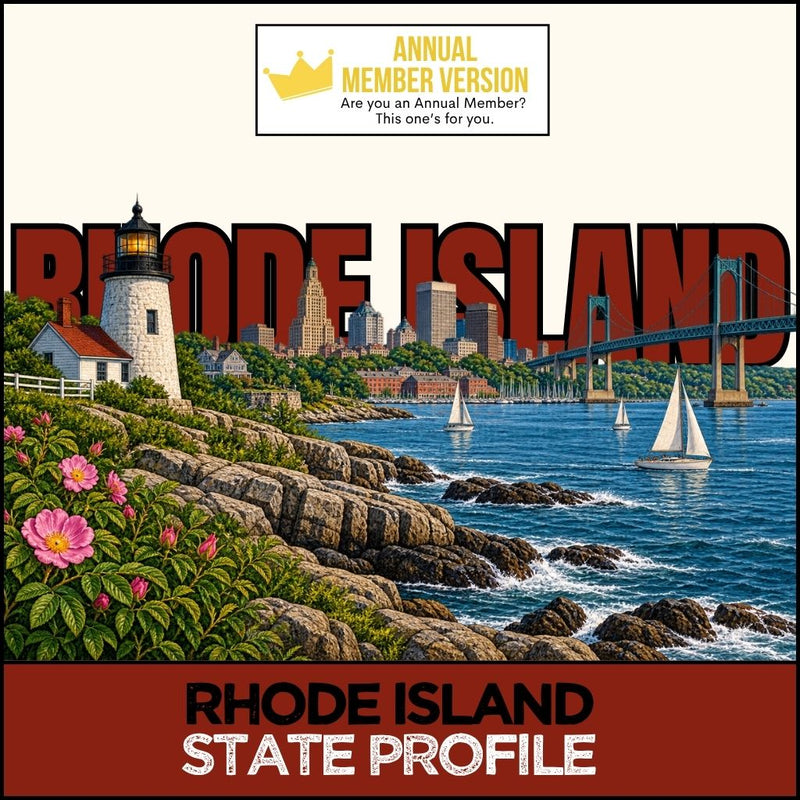
- Rhode Island, the nation's smallest state, which developed the Rhode Island Red chicken in the 1850s and now has the highest percentage of beginning farmers of any state
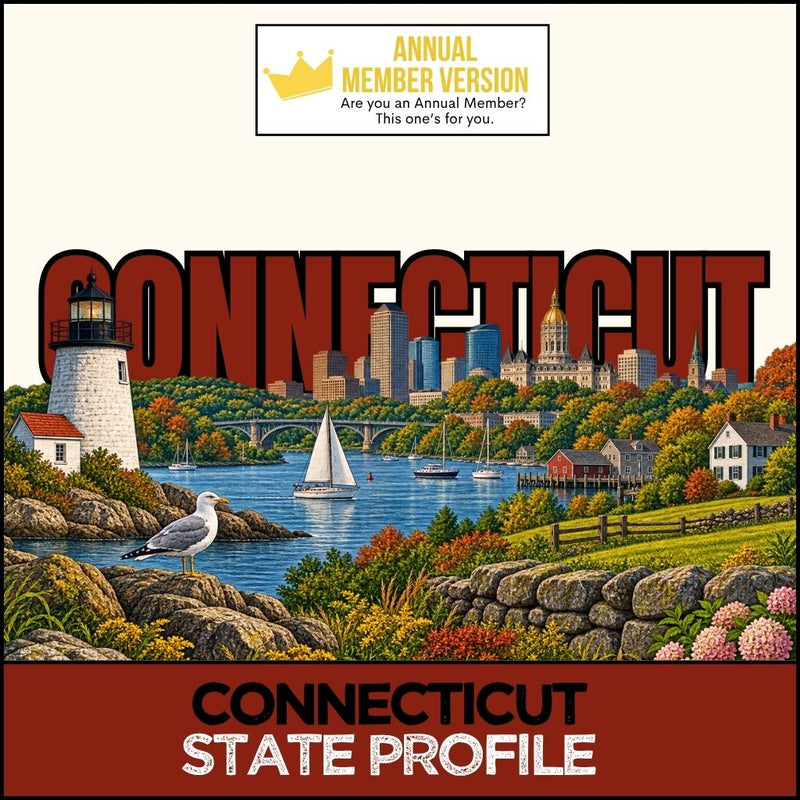
- Connecticut, where shade grown tobacco once supplied some of the world's finest cigar wrappers, and where farmers today manage roughly 70,000 acres of shellfish grounds along Long Island Sound
A great tie-in for: state agriculture units, geography, ag economics, and regional comparison lessons.
These work as an introduction to a regional agriculture unit, an FFA Week or Ag Literacy Week activity, or a set of substitute lessons that still teach something real. Students who think of agriculture as just what happens locally will often see it differently once they compare five states side by side.
📁 What's Included:
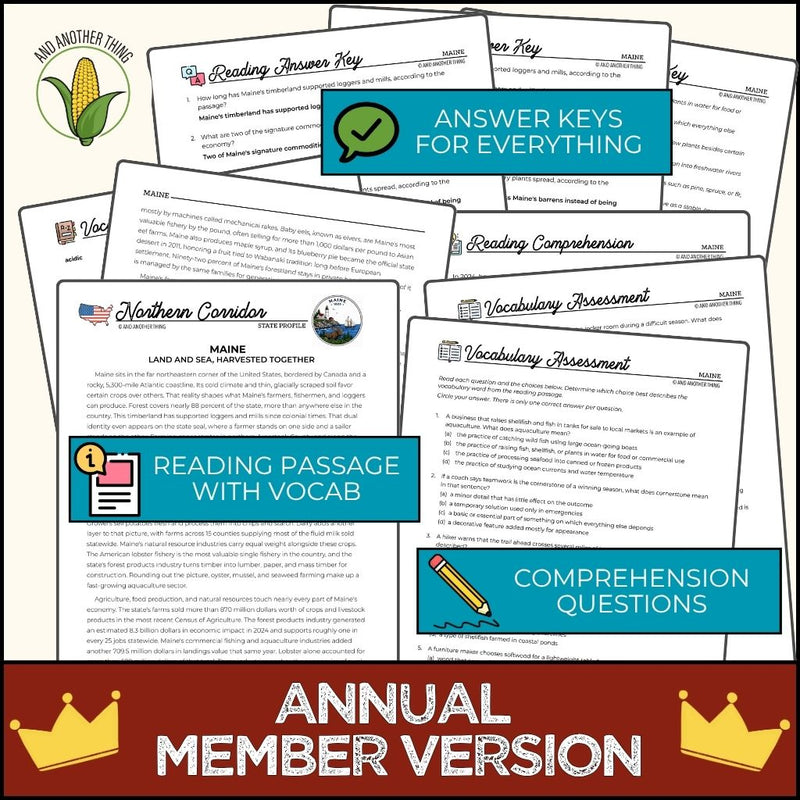
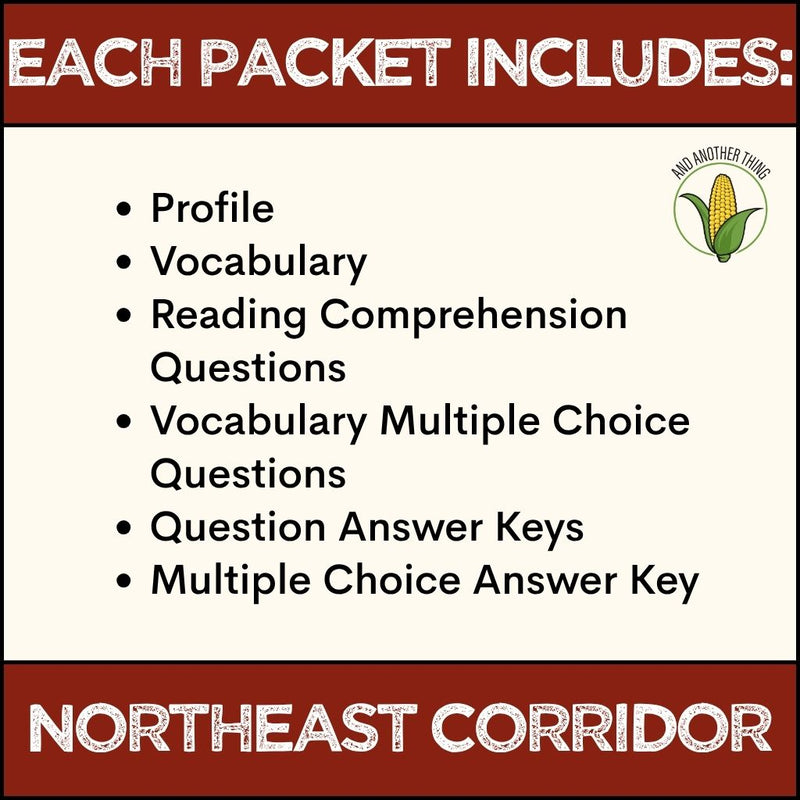
- Reading Passage: a six-paragraph state profile covering geography, top commodities, economic impact, lesser-known specialties, challenges, and the future outlook for agriculture in the state
- Vocabulary Page: twelve terms pulled from the passage with dictionary definitions and original example sentences
- Reading Comprehension Questions with Answer Key: ten questions anchored to specific passage content, each built around a vocabulary term, with a full answer key
- Vocabulary Assessment with Answer Key: twelve multiple choice questions testing word meaning, with a complete answer key
Our shipping is based on total order amount. Shipping will be automatically calculated when shopping online. (There is no shipping charged on digital download products. I mean who would do that really?)
We ship by UPS. You will receive a tracking number when your order ships.
If you are completing a School Purchase Order or if you just want to estimate your total expenses use the following information:
- For order totals $100 and under ---- add $15
- For order totals $101 to $340 ---- add $20
- Order totals over $350 ---- add $30
- Make sure to provide a physical address...UPS will NOT deliver to a Post Office box. We tried. Then we received a firm talking to and we had to go to bed without dinner. Please don't make us try that again.
🔒 Annual Member Exclusive
🍁 State Ag Profiles: Northern Corridor
The Northern Corridor stretches across six New England states that share cold winters, rocky soil, and a deep reliance on both forest and sea, from lobster boats and cranberry bogs to maple sugarhouses and dairy pastures. Each profile in the set follows the same format, so students build consistent vocabulary and comprehension skills while comparing how geography and history have shaped agriculture differently in each state.
Explore the region through:
- Maine, which grows nearly all of the nation's wild blueberry harvest and is home to the country's most valuable single fishery, American lobster
- New Hampshire, where Scots-Irish settlers planted North America's first potato crop in 1719, and where nearly one in three farms now sells directly to consumers, the highest rate in the country
- Vermont, where producers tap more than 8 million maple trees to supply over half of the nation's maple syrup
- Massachusetts, home to New Bedford, the nation's top value seafood port for more than two decades, and the country's second largest cranberry producer
- Rhode Island, the nation's smallest state, which developed the Rhode Island Red chicken in the 1850s and now has the highest percentage of beginning farmers of any state
- Connecticut, where shade grown tobacco once supplied some of the world's finest cigar wrappers, and where farmers today manage roughly 70,000 acres of shellfish grounds along Long Island Sound
A great tie-in for: state agriculture units, geography, ag economics, and regional comparison lessons.
These work as an introduction to a regional agriculture unit, an FFA Week or Ag Literacy Week activity, or a set of substitute lessons that still teach something real. Students who think of agriculture as just what happens locally will often see it differently once they compare five states side by side.
📁 What's Included:
- Reading Passage: a six-paragraph state profile covering geography, top commodities, economic impact, lesser-known specialties, challenges, and the future outlook for agriculture in the state
- Vocabulary Page: twelve terms pulled from the passage with dictionary definitions and original example sentences
- Reading Comprehension Questions with Answer Key: ten questions anchored to specific passage content, each built around a vocabulary term, with a full answer key
- Vocabulary Assessment with Answer Key: twelve multiple choice questions testing word meaning, with a complete answer key
Our shipping is based on total order amount. Shipping will be automatically calculated when shopping online. (There is no shipping charged on digital download products. I mean who would do that really?)
We ship by UPS. You will receive a tracking number when your order ships.
If you are completing a School Purchase Order or if you just want to estimate your total expenses use the following information:
- For order totals $100 and under ---- add $15
- For order totals $101 to $340 ---- add $20
- Order totals over $350 ---- add $30
- Make sure to provide a physical address...UPS will NOT deliver to a Post Office box. We tried. Then we received a firm talking to and we had to go to bed without dinner. Please don't make us try that again.